
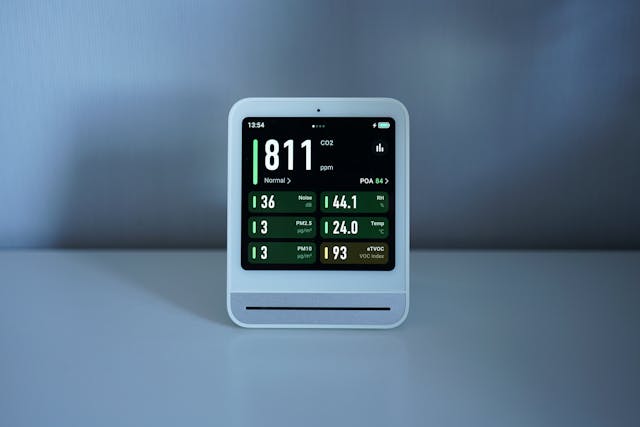
Most homeowners pay close attention to what they can see: roof shingles, plumbing leaks, peeling paint, and cracks in the drywall. But some of the most important conditions inside a house are completely invisible. Dust, humidity, carbon dioxide, and airborne pollutants can affect comfort and health long before there are obvious warning signs.
That raises an increasingly common question: is it worth buying an air quality sensor for the home?
In many cases, the answer is yes.
The Air You Breathe Matters More Than You Think
Indoor air can be surprisingly complex. Everyday activities like cooking, cleaning, showering, and even sleeping can change the quality of the air inside a home. In warm, humid climates, moisture adds another layer of concern by creating conditions where mold and mildew can thrive.
An air quality sensor provides real-time information about what is happening indoors. Depending on the model, it may track:
- Humidity
- Temperature
- Particulate matter (dust and smoke)
- Volatile organic compounds (VOCs)
- Carbon dioxide (CO₂)
These readings help homeowners spot trends that would otherwise go unnoticed.
When a Home Feels “Off”
Sometimes a house gives subtle clues that something is not quite right. Windows fog up in the mornings. Musty odors linger in closets. Family members complain of headaches or stuffiness. The air feels heavy even when the thermostat says the temperature is comfortable.
Without measurements, it is easy to guess wrong about the cause.
A sensor turns those suspicions into useful data. High humidity may explain the musty smell. Elevated particulate levels may point to an inefficient air filter. Rising CO₂ levels can reveal poor ventilation.
A Helpful Tool, Not a Magic Solution
Air quality sensors are excellent for monitoring conditions, but they do not solve problems by themselves. Think of them as an early warning system.
If readings show persistent humidity above 60 percent, the next step may be improving ventilation or adjusting the air conditioning system. If VOC levels spike after using certain products, better ventilation or alternative cleaners may help.
The sensor provides the facts needed to make informed decisions.
Are They Worth the Cost?
For most homeowners, a quality sensor is a sensible investment. Reliable units are available at a range of price points, and the information they provide can help prevent more expensive issues related to mold, poor HVAC performance, and excess moisture.
They are especially useful in homes with pets, allergy sufferers, recent renovations, or rooms that tend to feel damp.
The Bottom Line
Air quality sensors offer something every homeowner can appreciate: clarity. Instead of wondering whether indoor conditions are healthy, homeowners can monitor them with confidence.
When it comes to protecting a home, knowing what is in the air is just as important as knowing what is behind the walls.
Recent Comments